

A deck is one of the hardest working parts of a home. It takes sun, snow, rain, furniture, grills, and a crowd of guests on a summer evening, and it rarely asks for anything in return. That is exactly why problems go unnoticed. Wood softens quietly, fasteners loosen a little each season, and a railing that felt solid last year may not be solid now. A careful inspection once a year, ideally before the weather turns warm and the gatherings begin, is the best way to catch trouble while it is still a small repair. Here is how to do it yourself, step by step.
Start by clearing the deck and looking at the big picture
Move furniture, planters, and the grill off the surface so you can see every board. Sweep away leaves and debris, since moisture hides under them and speeds up decay. Then stand back and look at the structure as a whole. The deck should sit level, the stairs should look straight, and nothing should lean, sag, or wobble. If you can see a visible dip in the surface or a gap where the deck meets the house, make a note of it. Those are signs that something underneath has shifted.
If you can safely reach the underside, look there too. Posts, beams, and joists tell you far more than the top surface does, and water damage often begins where you cannot see it from above.
Probe the wood for soft spots
Sight alone is not enough. Wood can look fine on the surface and still be weak inside. Take a screwdriver or an ice pick and press it into the wood in places that stay damp, such as the bottoms of posts, the edges of boards, and areas around fasteners. The North American Deck and Railing Association explains in its consumer deck safety checklist that if the tool sinks in about a quarter to a half inch, or the wood feels soft and spongy, decay may be present. Check support posts, joists, deck boards, railings, and stairs, and pay special attention to any wood that touches fasteners or stays wet.
A few cracks or surface splits on a board are normal and mostly cosmetic. Deep rot is different. A soft post or joist is a structural problem and should be looked at by a professional before anyone uses the deck.
Check where the deck meets the house
The ledger board is the piece that attaches the deck to the side of your home, and it is a common source of deck failures. It carries a large share of the deck’s weight, so its connection matters a great deal. Look for rust stains, gaps, loose bolts, and signs of water getting behind the board. Flashing, the thin metal or plastic shield where deck and house meet, should be intact and positioned to send water away from the joint.
This is not an area for guesswork. If anything looks wrong at the ledger, stop using the deck and have it evaluated, because a poor connection can fail suddenly and without warning.
Hire experienced hands when the job is bigger than a weekend
A tight screw or a replaced board is easy work for most homeowners. Rebuilding stairs, replacing a ledger connection, swapping out rotted posts, or adding a new railing system is another level of work, and it needs the right materials, local code knowledge, and a good eye for structure. A seasoned team like Quality Decking of Utah can evaluate the full frame, explain what needs fixing now and what can wait, and carry out repairs that follow current building requirements. Getting an honest evaluation also lets you budget properly instead of reacting to a surprise failure.
If your deck is more than a couple of decades old, an evaluation is especially worthwhile. Age alone does not mean a deck must be replaced, but older structures often have corroded hardware and hidden decay that only an experienced eye will catch.
Test the fasteners and hardware
Over time, nails and screws can pop up, loosen, or corrode. Walk the deck and look for raised heads, which can also catch bare feet. Tighten loose screws and replace any that are rusted. Look at joist hangers, brackets, and bolts underneath as well. Rust that flakes or leaves deep pitting means the hardware is losing strength and should be replaced with corrosion resistant fasteners that suit your decking material.
A good habit is to keep a small container of the correct screws on hand so small fixes happen right away rather than getting postponed.
Shake the railings and check the stairs
Railing failures cause a surprising share of deck injuries, mostly because people lean on them without thinking. Push firmly on every section, post, and baluster. Nothing should flex, rattle, or pull away. The association notes that most codes call for a railing height of 36 inches, and many builders recommend 42 inches, with spaces between rails no wider than four inches so small children and pets cannot squeeze through. Check your local requirements, since they vary.
On stairs, make sure each step is solid and level, treads are not split, and the handrail is firmly attached from top to bottom. Loose stair parts are easy to overlook and easy to trip on.
Clean and protect the surface
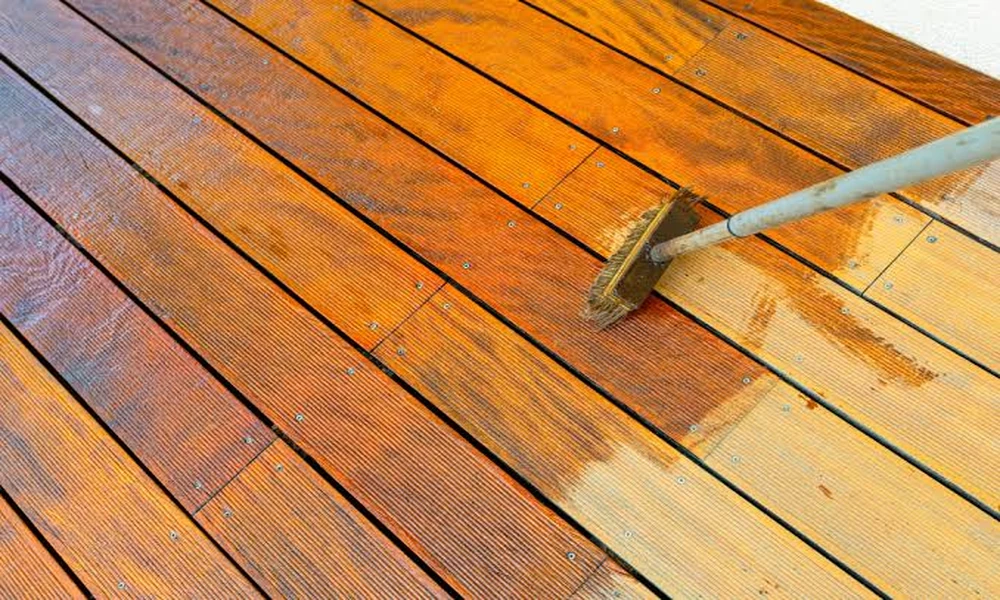
Once the inspection is done, a good cleaning improves both looks and lifespan. Remove mildew, dirt, and algae with a cleaner suited to your decking material and follow the manufacturer’s directions. If a wood deck has lost its coating or water no longer beads on the surface, apply a fresh sealer or stain. A protected surface resists moisture, and moisture is the main enemy of any deck.
Keep plant pots on stands or feet so water does not pool underneath them, and trim back shrubs that trap damp air against the structure.
Final thoughts
A safe deck is the result of small, regular habits rather than one large project. Clear it, probe the wood, check the ledger, test the hardware, shake the railings, and protect the surface. Do that every year and most problems will show up early, when they are cheap to fix. Anything involving structure, the house connection, or heavy rot deserves a professional opinion. Spend an afternoon on inspection now, and your deck will be ready for every cookout, family gathering, and quiet evening the season brings.
