

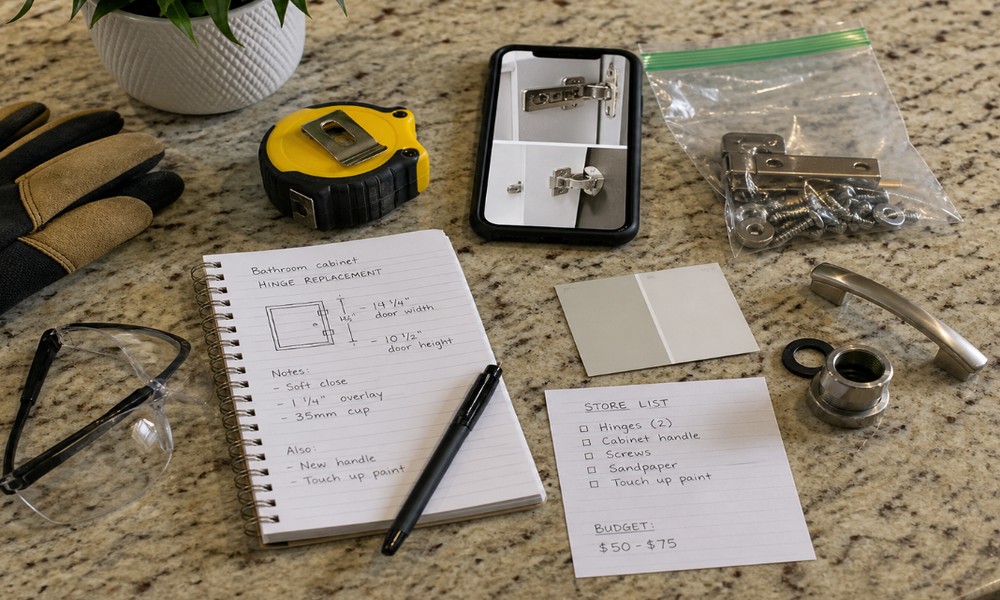
A hardware store trip sounds simple at first. You need one screw, one tool, or one small part. Then you get there and suddenly there are ten sizes, five finishes, and three versions that all look almost the same. It can get confusing fast.
That is why it helps to prepare before you go. You do not need to bring a lot. You just need the right information, measurements, samples, and photos so you can choose the correct item the first time.
A little preparation can save you from buying the wrong part, making another trip, or standing in the aisle trying to guess what fits.
Bring Measurements
Measurements are one of the most important things to bring before visiting a hardware store. Many home repair items depend on size. If you guess, there is a good chance you will buy the wrong thing.
Measure the space, part, opening, or area you are working on. Write the numbers down or save them on your phone.
You may need measurements for:
- Window screens
- Door hardware
- Cabinet pulls
- Shelving
- Pipes
- Screws
- Filters
- Light fixtures
- Paint areas
- Lumber or boards
Try to measure width, height, depth, and length when needed. For bigger projects, take more measurements than you think you need. It is better to have extra details than not enough.
For paint, flooring, mulch, or lumber, measure the full area so you can estimate how much material to buy.
Bring Photos of the Problem
Photos can help a lot, especially if you are not sure what something is called. Take clear pictures of the broken part, the area around it, and how the item is installed.
For example, if you need a plumbing part, take a photo of the pipe, connection, and location. If you need a door lock part, take pictures of both sides of the door, the latch, and the strike plate.
Photos help you explain the problem without relying only on words. Sometimes a small detail in the photo can point you toward the right replacement part.
Take photos from different angles. Also, take one wider photo that shows the full area. Close-up photos are useful, but they can be hard to understand without context.
Bring the Old Part When Possible
If something broke, bring the old part with you if it is safe and easy to remove. This can make the shopping trip much easier.
You can bring items like:
- Screws
- Bolts
- Nuts
- Washers
- Cabinet handles
- Faucet cartridges
- Shower heads
- Light bulbs
- Air filters
- Hinges
- Door knobs
- Batteries
- Sprinkler parts
Having the old part lets you compare size, shape, threading, finish, and connection style. This is especially helpful with small hardware. A screw that looks “close enough” may still be too short, too long, too wide, or the wrong thread type.
Place small parts in a plastic bag so they do not get lost in your pocket or car.
Bring the Right Tool Details
If you are buying accessories for a tool, bring the tool model number or take a photo of the label. Many blades, bits, batteries, filters, and attachments only fit certain tools.
This matters for:
- Drill bits
- Saw blades
- Sanding pads
- Tool batteries
- Trimmer line
- Pressure washer parts
- Vacuum filters
- Extension cords
- Charger replacements
Do not rely on memory. Tool names and model numbers can look very similar. A quick photo of the label can prevent mistakes.
Bring Paint Information
If you are buying paint, bring as much information as you can. Paint can be tricky because color, sheen, and surface type all matter.
Bring:
- Paint color name or code
- A photo of the paint can label
- A small paint chip, if matching a wall
- Room measurements
- Surface type
- Notes about indoor or outdoor use
If you are repainting a wall, knowing the sheen is important. Flat, eggshell, satin, semi-gloss, and gloss all look different after they dry. Even if the color matches, the wrong sheen can make touch-ups stand out.
If you do not know the color, you may be able to bring a small sample from the wall, trim, or painted item. Just make sure it is clean and large enough to compare.
Bring Project Notes
Before going to the store, write down what you are trying to do. This may sound unnecessary, but it helps when there are several steps or items involved.
For example, instead of writing “fix sink,” write:
“Bathroom sink is leaking under the cabinet where the drain pipe connects. Need replacement part or seal.”
That kind of note is much more useful. It tells you and anyone helping you what the actual issue is.
For bigger projects, list the steps and supplies you think you need. This helps you avoid forgetting small items like screws, tape, anchors, sandpaper, brushes, or connectors.
Bring Your Budget
Hardware store trips can grow quickly. You go in for one item, then see tools, upgrades, and extra supplies. Before you go, have a rough budget in mind.
This does not mean you should always choose the cheapest item. Sometimes paying a little more for a better tool or stronger material makes sense. But knowing your budget helps you avoid overspending.
For larger projects, separate your budget into materials, tools, and extra supplies. Always leave a little room for small items you forgot to include.
Bring Safety Information
Some projects need safety supplies. If you are buying chemicals, cleaners, paint, adhesives, blades, or power tools, think about what protection you may need.
You may need:
- Work gloves
- Safety glasses
- Dust mask
- Ear protection
- Knee pads
- Drop cloths
- Ventilation supplies
If your project involves electrical, plumbing, roofing, chemicals, or structural work, be honest about your skill level. Some repairs are fine for homeowners. Others may need professional help for safety.
Bring Your Phone Fully Charged
Your phone is one of the most useful things to bring. You can use it for photos, notes, measurements, calculators, project videos, and product information.
You can also use it to check:
- Room dimensions
- Saved shopping lists
- Photos of old parts
- Paint codes
- Tool model numbers
- Product instructions
- Project plans
A charged phone can save you from guessing.
Bring Patience
This one sounds simple, but it matters. Hardware stores have many options because home repairs are specific. One small difference can change what part you need.
Take your time. Compare items carefully. Read labels. Check sizes. If something seems unclear, slow down before buying it.
Rushing often leads to the wrong part, and that means another trip.
Final Thoughts
Before visiting a hardware store, bring measurements, photos, old parts, project notes, paint details, tool model numbers, and a clear idea of your budget. These simple things can make your trip faster and less stressful.
You do not need to know everything before you walk in. But the more information you bring, the easier it is to find the right item.
A good hardware store trip starts before you leave home. Check the problem, take pictures, measure carefully, and bring anything that may help you compare. It may take a few extra minutes, but it can save you time, money, and frustration later.
This post was written by a professional at Anawalt Lumber. Anawalt Lumber is a family-owned lumber yard Los Angeles and hardware store serving Los Angeles for over a century. Known for quality lumber, contractor supplies, hardware, and a full-service nursery, Anawalt provides personalized service for homeowners and licensed contractors. From job pricing and bulk discounts to special-order materials with fast delivery, Anawalt is your trusted local building supply partner in Malibu, West LA, and Hollywood.
