

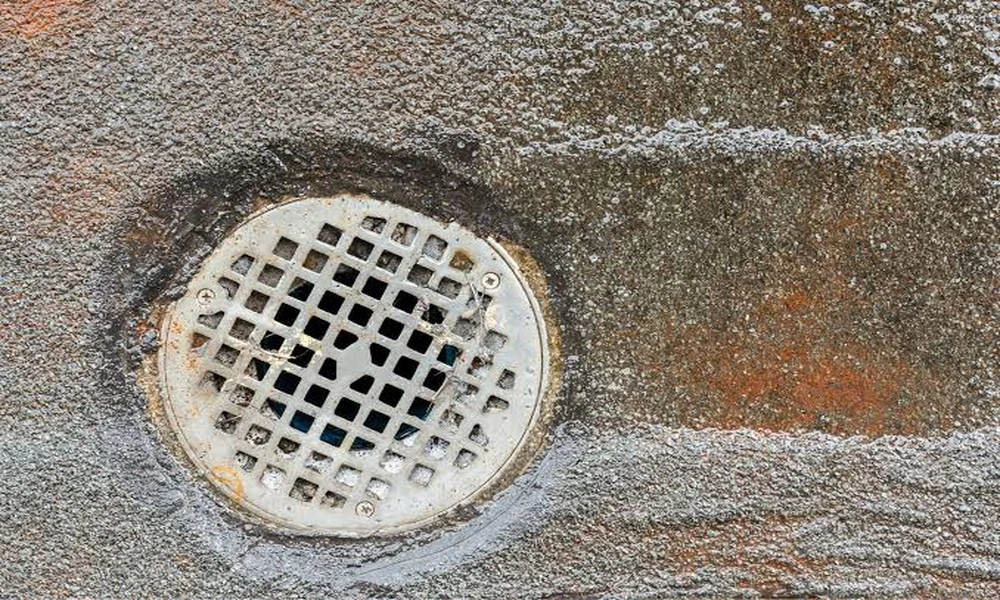
Most people never think about the floor drain in their basement until it does something alarming. It sits there under the furnace or beside the laundry tub, a round grate set slightly lower than the concrete around it, and it quietly accepts whatever trickles its way. Yet that grate is the entrance to a long underground route that runs beneath the slab, through the foundation wall, under the front lawn and finally into the public sewer. When water comes up instead of going down, the cause is sitting somewhere along that route.
Thinking of a backup as a location problem rather than a mystery makes it far easier to solve. Every stretch of the path fails in its own way, leaves its own clues and calls for its own repair.
Across the west side of Greater Cleveland, that is how the team at Carlong Plumbing tends to approach a wet basement, by working outward from the drain until the weak point shows itself. Run by Jamie out of Middleburg Heights, the company has roughly a quarter century of experience with the region’s older housing stock, and it carries a sewer builder license alongside its master plumber credentials, so the trail does not have to stop at the foundation wall.
So grab a flashlight. Here is the trip, one stretch at a time.
Inches Below the Grate
The first thing under the grate is a trap, a curved section of pipe that holds a small pool of water. That pool is the only thing standing between your basement air and the sewer gas below.
Traps in floor drains rarely get fresh water, so they slowly evaporate. Heating season speeds this up because furnace air is dry. A basement that smells like sewage with no visible water is very often just a dry trap, and a bucket of water poured down the grate fixes it in seconds. Some homeowners add a splash of mineral oil afterward, which floats on top and slows evaporation.
Grit, lint and hair also settle here. If the floor drain alone is sluggish while upstairs fixtures run fine, the clog likely lives in this first short stretch.
Under the Slab
Past the trap, the drain joins a pipe buried beneath the concrete floor. In many homes built before the 1970s this pipe is cast iron, and cast iron eventually scales on the inside and rusts through along the bottom.
A scaled pipe narrows gradually, which is why a washing machine is so often the thing that tips it over. A single drain cycle dumps a large amount of water in a short burst, more than a corroded pipe can carry, and the overflow comes right back out of the lowest opening in the house.
The tricky part about this stretch is that it hides under finished floors, carpet and storage shelves. A camera fed through the cleanout is the only practical way to see it without breaking concrete.
Through the Foundation Wall
Somewhere near the front of the basement the main drain turns and exits through the foundation. Look for a capped fitting on the pipe here. That is the main cleanout, and knowing where it sits saves real time and money during an emergency.
This is also where many older Northeast Ohio homes hide a design choice that causes storm backups. For decades it was normal to connect the perimeter footing drains, the clay tiles that collect groundwater around the foundation, directly into the sanitary line. Downspouts were often tied in as well. Every heavy rain therefore sends a surge of clean groundwater and roof runoff into the same pipe that carries household wastewater, which is a lot to ask of a four inch line.
Beneath the Front Yard
Outside the wall, the pipe becomes the lateral, the private sewer line that crosses the yard toward the street. In older Cuyahoga County neighborhoods this is frequently vitrified clay laid in short sections with joints every couple of feet.
Those joints are a problem waiting to happen. Maple and silver maple roots find the faint moisture seeping out and slip inside, where they grow into dense mats that catch paper and grease. Ground movement over the decades can also shift sections out of line, creating a lip that snags debris, or a sag that holds standing water.
A few signs point to trouble in this stretch rather than inside the house.
- Several fixtures drain slowly at the same time, not just one.
- A toilet gurgles when the washer drains.
- The backups return a few months after every cleaning, often in spring and fall when roots are most active.
Clearing roots with a cable machine buys time, while hydro jetting scours the pipe walls more thoroughly. If a camera shows cracked or collapsed sections, excavation and replacement with modern pipe is the lasting answer.
At the Main
The lateral ends where it taps into the public sewer under the street. Responsibility is a common source of confusion here. In most Ohio communities the property owner is responsible for the lateral all the way to the main, a point cities such as Columbus make clear in their guidance on basement flooding.
When the main itself overloads during a storm, sewage can travel backward up the lateral and into the basement, even if your own pipe is in perfect shape. A good rule of thumb is to check with neighbors. If water is rising in several basements on the street, the main is surcharging and the sewer district needs a call. If only your house is affected, the problem sits somewhere on your side.
Closing the Route Behind You
For homes that flood when the main surcharges, a backwater valve installed on the lateral acts like a one way gate. Wastewater can leave, but nothing can come back in. It is a strong defense, though it works best after footing drains and downspouts are disconnected from the sanitary line, since a closed valve also traps any groundwater that is still flowing into the pipe from inside the house. During a storm, the household also needs to hold off on showers and laundry until the valve reopens.
The whole route from grate to main might be sixty or eighty feet long, and most homeowners will never see a single inch of it. Still, knowing where each stretch begins and ends turns a frightening puddle into a solvable question. When water appears, the useful thing to ask is not just what went wrong, but how far down the line it happened.
