

Have you ever picked up your flask, taken a whiff, and thought, “What is that smell?” You’re not alone here. That’s a pretty common problem that indicates it’s time for deep cleaning.
Read on to learn how to approach this properly and say goodbye to those unpleasant odours forever.
Rinse Quickly After Every Use
Let’s start with the basics. Don’t leave your flask to collect bacteria and who-knows-what-else overnight, especially if you use it for other beverages besides water.
Instead, rinse it with warm water after each use. This simple step alone is astonishingly effective at preventing gunk buildup.
Water temperature plays an important role, too. It shouldn’t be scalding but rather warm enough to dissolve any sugars or proteins without damaging the material.
With this simple daily habit, your flask stays clean and ready whenever you need it.
Use Natural Cleaning Agents
Fortunately, your kitchen cabinet already holds everything you need to get the job done. And, the best part–all these ingredients are eco-friendly, meaning both your health and the environment will be protected.
For example, when combined with water, baking soda becomes a multipurpose cleaning agent. Making a thick, gritty paste helps you remove tough stains and gunk. You will notice them disappearing after only a few minutes of contact.
This gentle abrasive action works particularly well on persistent discolouration without scratching your container’s surfaces.
For mineral deposits, use diluted white vinegar and simply fill your flask halfway. Keep in mind, vinegar is acidic, and it isn’t recommended to do it if your flask is made of metal or plastic.
By morning, those cloudy patches will be gone completely. The best part is that you don’t have to worry about any lingering scents at all. And the vinegary aroma will disappear quickly after a thorough rinse.
Finally, if you want to add a pleasant fragrance, go with diluted lemon juice. Its natural acidity cuts through residue while leaving a subtle, refreshing smell behind. Once again, mind the rule about plastic or metal flasks.
These natural approaches are not only effective but also budget-friendly and gentler on both your flask and the planet.
In fact, many homeowners have abandoned commercial products entirely after discovering how remarkably well these staples perform.
Invest in a Quality Brush
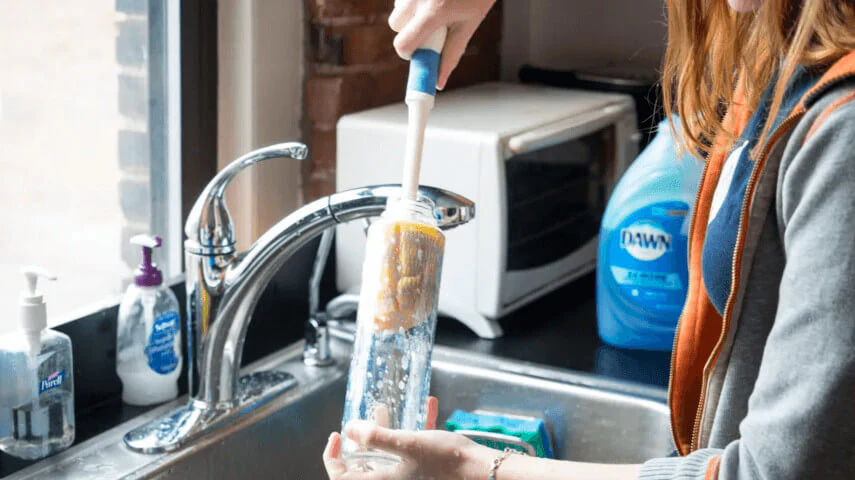
While natural cleaners dissolve many residues, they sometimes need extra help to reach all surfaces, especially in narrow-necked flasks.
This is why a dedicated bottle brush is a must. Regular cleaning experts explain that it dislodges hidden buildup that even the most thorough washing session misses completely.
When selecting your tool, look for options with durable bristles arranged in various lengths. It seems like a small detail, but trust us, it makes a tremendous difference.
Longer fibres reach the container’s bottom corners, while shorter ones scrub the sides, covering all surfaces with each stroke.
The material it’s made of matters as well. Silicone scrubbers tend to dry faster and resist mould better than their traditional counterparts. Despite being a little more expensive, they outlast cheaper options by years, making them surprisingly cost-effective in the long run.
Include this step in your regular cleaning routine to ensure your flasks stay clean. This doesn’t even need to be done daily–just once a week should be more than enough.
Clean Caps and Straws Separately
Mouthpieces, lids, straws, and flip-tops require equally meticulous attention way beyond quick rinsing.
To perfectly sanitise these parts, your best bet is to disassemble everything. Many bottles have components that twist apart specifically for washing.
The tiny rubber gaskets that form watertight seals are particularly important because they are known to retain moisture and fungi.
Remove the smaller pieces and use an old toothbrush to scrub each one separately for better results. Those precise bristles are perfect for these tiny spaces that normal brushes cannot reach.
Straws present their own unique challenges as well. Pipe cleaners are lifesavers, though, reaching through the entire length to pull out hidden gunk.
Alternatively, soak them in a solution of one tablespoon of baking soda dissolved in warm water for 30 minutes, then rinse.
Sanitise Regularly
Daily rinsing keeps your bottle looking clean, but every so often it needs a deeper clean to clear out what you can’t see.
This step is especially important after someone in your household has been unwell or if your flask has been sitting unused for a while.
A simple diluted bleach mix works well. You just need to combine 1 teaspoon of regular bleach with 4 cups of water, pour it into your bottle, and let it sit for 5 minutes.
After that, rinse thoroughly until there’s no scent left—this ensures there are no lingering chemicals that could affect the taste of your water.
If you’d rather avoid bleach, no big deal. Hydrogen peroxide is a gentle but equally effective option for killing germs.
Also, for days when you’re travelling or stuck at the office without your usual supplies, sanitising tablets are a convenient alternative. Just pop one in with water and let it do the work.
Including this deeper clean once a month alongside other routine household tasks helps keep your bottle truly fresh and hygienic. It’s an easy extra layer of protection for you and your family.
Air Dry Thoroughly to Prevent Mould
Moisture loves to help germs and mould grow in your bottles. Nonetheless, if you dry them the right way, you’ll keep funghi from moving in after you’ve just cleaned everything.
For that purpose, don’t put the cap back on right away. When you store your bottle with the lid off, air gets to flow through it freely. This helps all the hidden water droplets evaporate instead of sitting around and causing problems.
Buying a bottle tree or a dedicated drying rack is also a smart idea. When you position your flasks upside down, gravity works in your favour by pulling water out rather than letting it collect at the bottom, where germs tend to multiply.
Sunlight is a fantastic helper, too, as it’ll both dry and naturally disinfect your containers. Just set your freshly washed bottle in direct sunlight for about an hour.
This speeds up drying while the UV rays work their magic, killing off any stubborn bacteria that survived the process.
For the best results, take your bottle apart and leave the pieces to dry overnight. It will give everything enough time to dry completely before you put it back together again.
Avoid Using the Dishwasher
Since hand-washing your flasks requires some effort, your dishwasher might seem like a tempting shortcut. Nevertheless, over time, strong jets and high temperatures can harm bottles.
Whenever plastic containers are placed in the dishwasher, they tend to distort slightly. Bacteria can hide in these microscopic, invisible cracks.
As for metal bottles, the special coatings slowly get thinner each cycle, which affects how they look and work.
The rubber parts that keep your bottle from leaking break down faster in the dishwasher, too. When these seals wear out, you’ll end up with water all over your belongings.
Even when flasks say “dishwasher-safe” on the label, they still wear out faster when washed in the machine.
In the long run, spending those extra minutes to wash them by hand pays off in the long run. A well-cared-for bottle that’s washed by hand can last over five years, but if you always use the dishwasher, you’ll probably need a new one within two years.
Conclusion
You now know everything you need, so you don’t have to put up with gross smells and hidden germs anymore. These quick and powerful methods take only minutes but make a huge difference.
So, don’t wait, make these habits part of your routine, and you’ll never have to deal with buildup again. After all, a clean bottle equals better health & hydration.
